Last updated: May 2026 · NEC 2026 current
Short Answer
Installing a Level 2 (240V) charger with new wiring requires an electrical permit in approximately 75% of U.S. jurisdictions. Plugging a Level 1 charger into an existing outlet almost never requires one. Everything between those two extremes depends on your specific situation — and this guide covers all of it.
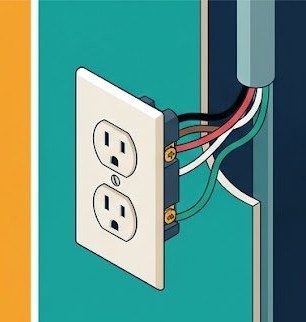
Why EV Charger Permits Exist
A home EV charger permit is not bureaucratic busywork. When you add a new 240V dedicated circuit to your electrical panel, you're creating a continuous 40–50 amp load that operates for 6–10 hours every night. That's a sustained draw equivalent to running four or five electric dryers simultaneously — and it's why the electrical code treats it as a significant addition to your home's electrical system.
The permit and inspection process verifies three core things: that your panel has spare capacity for the new load, that the wiring is properly sized (6 AWG copper minimum for a 50A circuit), and that the installation meets the National Electrical Code (NEC) Article 625 requirements for electric vehicle supply equipment. An inspector can catch a miswired neutral or undersized wire before it causes a fire. A 15-minute inspection is a reasonable trade for that protection.
Level 1 Chargers (120V): Usually No Permit
A Level 1 charger is the cord that came with your vehicle — a standard 120V plug that charges at about 3–5 miles of range per hour. It's not a separate device you purchase and install; it's a charging cable that happens to use a normal household outlet.
If you're plugging a Level 1 charger into an existing, properly rated 120V outlet, no permit is required in virtually any U.S. jurisdiction. You're simply using an existing outlet — no modification to your electrical system, no permit needed.
Exception: Installing a New 120V Circuit
If you need to install a new 120V circuit or outlet to reach where your car parks, that new circuit does require an electrical permit — even though the charger itself is just a cord. The permit is for the electrical work, not the charger device.
Level 2 Chargers (240V): Almost Always Need a Permit
Level 2 chargers operate on a dedicated 240V circuit and deliver 12–30+ miles of range per hour depending on amperage. Installing one means running a new branch circuit from your electrical panel — and that's where the permit requirement kicks in.
Under the International Residential Code (IRC R105.2), adding a new branch circuit is not on the permit-exempt list. Most local jurisdictions follow this standard or their own equivalent. The result: approximately 75%+ of U.S. cities and counties require an electrical permit for Level 2 EV charger installation involving new wiring.
The exceptions are limited. A small number of rural jurisdictions with minimal electrical code adoption do not require permits for residential electrical work below a certain scope. These are uncommon, and even in those areas, a permitted installation protects you legally and financially in ways an unpermitted one does not.
The NEMA 14-50 Outlet Question
Many homeowners ask whether they can skip the permit by plugging their Level 2 charger into an existing NEMA 14-50 outlet — the type used for RV hookups and some electric dryers. The answer depends on your specific situation:
- Existing outlet, previously permitted: If a licensed electrician installed the NEMA 14-50 outlet under permit and it was inspected, and the circuit is rated for continuous loads (not all dryer circuits are), most jurisdictions do not require a new permit to plug in a Level 2 charger. Confirm this with your building department.
- Existing outlet, origin unknown: If you're not sure whether the outlet was permitted or whether it's rated for continuous EV charging loads, a quick call to your building department or electrician is worth it before connecting your charger.
- California and some other states: Some jurisdictions require EV charging circuits to be explicitly rated for EVSE use — an outlet originally pulled for a dryer or RV may not qualify without documentation or modification.
The safest approach: contact your building department, describe the situation clearly, and get confirmation in writing or by email.
Hardwired vs. Plug-In Level 2 Chargers
Level 2 chargers come in two installation types. Plug-in chargers have a power cord that connects to a NEMA 14-50 or NEMA 6-50 receptacle — you can unplug and take the charger with you. Hardwired chargers are permanently connected directly to your panel or subpanel with no plug or outlet in between.
Both types require a permit for the new circuit installation. However, hardwired chargers carry an additional requirement under NEC 2026: in states that have adopted the 2026 code, hardwired installations must be performed by a "qualified person" — which means a licensed electrician in most adopting states. The plug-in option preserves the homeowner-builder exemption in more jurisdictions for now.
What NEC 2026 Changed
The National Fire Protection Association approved the 2026 edition of the National Electrical Code (NEC) in June 2025. Section 625.4 now requires that "permanently installed electric vehicle power transfer system equipment shall be installed by qualified persons." A floor motion to remove this language failed after debate at the technical meeting.
In practical terms, this means: in states that adopt NEC 2026, hardwired Level 2 charger installations must be performed by a licensed electrician. States that have already adopted NEC 2026 include California, Florida, New York, Illinois, Massachusetts, and others. States that haven't yet adopted it operate under their current code edition.
See the full NEC 2026 guide for the adoption map and what it means for homeowners who planned to DIY.
Special Situations
Detached Garage
Installing a charger in a detached garage almost always requires a permit because new wiring must run from the main service panel to the detached structure — typically underground in conduit. This also triggers additional code requirements around weatherproofing and GFCI protection. Budget additional time and cost for this configuration.
Condos and Multi-Unit Buildings
Multi-family installations require both local permits and building management approval. Many jurisdictions also require load management systems for buildings with multiple chargers. Your building's electrical capacity and HOA rules both factor in. See the full condo and apartment guide.
New Construction
If you're building a new home, EV infrastructure requirements are increasingly embedded in the building permit itself. California requires EV-ready conduit in all new single-family homes. Colorado, Maryland, and several other states have similar requirements for new construction. Check your state guide to see what's required in your area.
How to Confirm Your Requirements
The most reliable method is to contact your local building or permits department directly. Have this information ready when you call:
- Your property address
- Charger type (Level 1 or Level 2)
- Installation type (plug-in or hardwired)
- Wiring situation (new circuit or existing outlet)
- Property type (single-family, condo, rental)
Ask specifically whether a permit is required, what documents you need to submit, whether online submission is available, and the current estimated review timeline. Getting this in writing takes 60 seconds and eliminates any ambiguity.
Summary Table
| Your Situation | Permit Required? | Notes |
|---|---|---|
| Level 1 charger — existing 120V outlet | Typically No | Confirm outlet is properly rated for continuous use |
| Level 1 charger — new 120V circuit | Yes | Permit is for the new circuit, not the charger |
| Level 2 plug-in — existing permitted NEMA 14-50 | Verify Locally | Call your building dept to confirm exemption |
| Level 2 plug-in — new 240V circuit | Yes | Standard electrical permit required in most jurisdictions |
| Level 2 hardwired — any configuration | Yes + Licensed Electrician | NEC 2026 requires qualified person in adopting states |
| DC Fast Charger (Level 3) | Yes — Multiple Permits | Utility coordination required in addition to building permits |
ChargePoint HomeFlex Level 2 EV Charger (J1772)
If you're going through the permit process anyway, it's worth getting a charger that's rated for up to 50 amps — giving you 25+ miles of range per hour on almost any EV. The ChargePoint Home Flex is adjustable from 16A to 50A, works with any EV brand, qualifies for many utility rebates, and is one of the most commonly installed residential chargers in the U.S. UL listed, indoor/outdoor rated, and widely stocked at major retailers.
- ✓ Adjustable 16A–50A output — works with any panel capacity
- ✓ Compatible with every EV brand (J1772; Tesla with adapter)
- ✓ 23-ft cable — reaches most garage parking positions
- ✓ Indoor & outdoor rated, hardwire or plug-in options
- ✓ Qualifies for many utility rebate programs
- ✓ UL listed — #1 best-seller, 4.3★ from 2,200+ reviews
As an Amazon Associate, EV Charger Permit Hub earns from qualifying purchases. Affiliate links support this free resource at no additional cost to you.
View on Amazon → ($549, Prime eligible)Frequently Asked Questions
Informational Only
This guide is for general educational purposes. Permit requirements vary by jurisdiction and change frequently. Always verify current requirements with your local building department before starting any electrical work. This is not professional electrical or legal advice.